-48%
Select options
This product has multiple variants. The options may be chosen on the product page
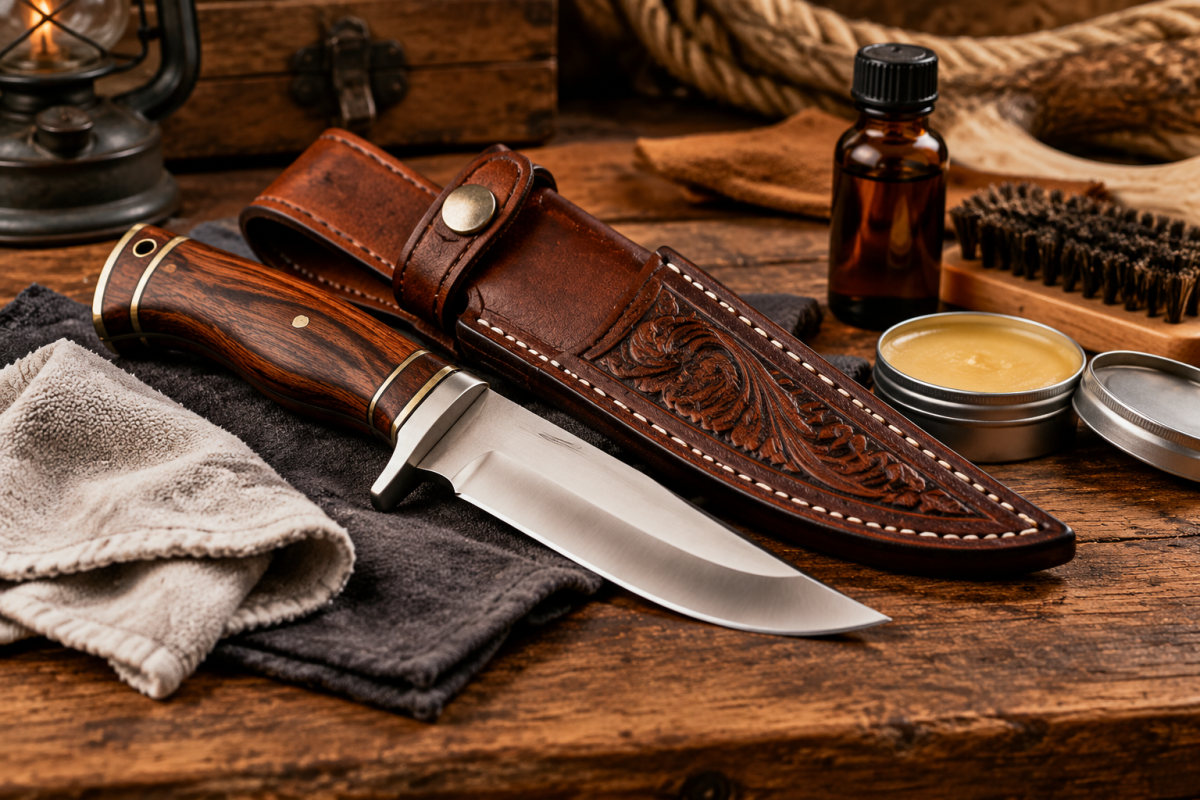
Learning How to Care for a Western Knife and Sheath helps preserve the blade, maintain the handle, and protect the sheath from unnecessary wear. Whether you use a Western-style knife for camping, hunting, outdoor activities, or collecting, regular maintenance can help prevent corrosion and keep the equipment in good condition. At WKNHuntingGear, understanding simple cleaning, drying, sharpening, and storage practices can help knife owners make their equipment last longer.
A Western Knife and Sheath consists of two components that require different care routines. The blade may be affected by moisture, dirt, and corrosive substances, while the sheath can suffer from trapped moisture, damaged stitching, or improper storage.
Carbon-steel blades are particularly susceptible to rust if they remain damp. Stainless-steel blades generally offer greater corrosion resistance, but they still require regular cleaning and drying. Leather sheaths can absorb moisture and hold it against the blade, increasing the risk of corrosion during storage.
For readers exploring knife maintenance through WKNHuntingGear, the most important habit is simple: clean and dry the knife after use, inspect the sheath regularly, and store both components appropriately. These steps help maintain the knife’s condition without requiring complicated equipment or expensive maintenance products.
Keeping the blade clean is an essential part of learning How to Care for a Western Knife and Sheath. Dirt, food residue, moisture, and other contaminants can affect the blade’s appearance and condition if left untreated.
Wipe the blade with a clean cloth after each use. If additional cleaning is needed, use mild soap and water when appropriate for the knife’s materials and the manufacturer’s instructions. Remove residue carefully, keeping your fingers away from the cutting edge.
Avoid putting a knife in a dishwasher. High temperatures, detergents, and prolonged moisture can damage the blade finish, handle, or other components.
After cleaning, dry the blade thoroughly with a soft cloth. Pay attention to the area around the handle, guard, or other joints where moisture may collect.
For carbon-steel knives, a thin layer of suitable protective oil can help reduce corrosion. If the knife is used for food preparation, choose an oil appropriate for food-contact use and follow the manufacturer’s guidance. Even stainless-steel knives should be dried before storage.
A properly maintained edge helps a knife perform as intended. Use a suitable sharpening stone or sharpening system according to the blade’s geometry and the manufacturer’s recommendations.
Avoid using the knife for tasks it was not designed to perform, such as inappropriate prying or twisting. Excessive force can damage the edge or tip. WKNHuntingGear readers should prioritize controlled handling and suitable maintenance tools when caring for a Western-style knife.
The sheath deserves as much attention as the blade. Proper Western Knife and Sheath Buying Guide helps preserve the leather’s shape, stitching, and ability to retain the knife securely.
Remove the knife carefully before cleaning the sheath. Use a soft, dry cloth or brush to remove loose dirt from the outside, belt loop, seams, and attachment points.
For light marks, wipe the leather with a slightly damp cloth. Avoid soaking it or using harsh household cleaners. If deeper cleaning is necessary, use a leather cleaner suitable for the sheath’s finish and test it on a hidden area first.
If your leather sheath becomes wet during camping, hiking, or hunting, remove the knife and gently blot away excess moisture. Leave the sheath in a well-ventilated place at room temperature until completely dry.
Never use a hair dryer, heater, open flame, or direct high heat to speed up the process. Excessive heat can cause leather to shrink, stiffen, or crack.
Leather conditioning helps maintain flexibility, but excessive treatment can soften the sheath and affect its fit. Apply a small amount of a suitable leather conditioner when the material appears dry or stiff, following the product instructions.
Some finishes require specialized care, so avoid assuming that every leather sheath can use the same product. Do not saturate the inside of the sheath with oil or conditioner.
At WKNHuntingGear, the key recommendation is to keep the sheath clean, dry, and structurally sound rather than applying unnecessary products.
Correct storage is one of the most important parts of How to Care for a Western Knife and Sheath, especially if the knife will not be used for several weeks or months.
Follow these practical guidelines:
If you own a knife with a wooden handle, follow the manufacturer’s care instructions for the particular wood or finish. Some materials may need occasional treatment, while others require only gentle cleaning.
For people in the United States who carry a knife outdoors, it is also important to check applicable state and local regulations. Knife restrictions can differ according to location, blade type, and carrying method.
Even a well-made Western Knife and Sheath can deteriorate if it is maintained incorrectly. Avoid these common mistakes:
Regular inspection makes it easier to identify small problems before they become serious. If a sheath no longer retains the knife securely or the blade can pierce through damaged material, stop using that sheath until it has been properly repaired or replaced.
Understanding How to Care for a Western Knife and Sheath comes down to consistent cleaning, thorough drying, suitable blade protection, gentle leather maintenance, and proper storage. A clean blade helps reduce corrosion, while a well-maintained sheath protects the knife during carrying and transport. By following the manufacturer’s care instructions and inspecting both components regularly, you can preserve their condition and usefulness. WKNHuntingGear readers should make these simple habits part of their regular knife maintenance routine.
Clean your Western Knife and Sheath equipment after use, particularly when the knife has been exposed to moisture, dirt, food residue, or outdoor conditions. Always dry the blade thoroughly before storing it.
A leather sheath is useful for carrying and short-term protection, but long-term storage inside leather is generally discouraged. Leather may retain moisture against the blade and contribute to corrosion, especially in humid conditions.
Remove the knife, brush away loose dirt, and gently wipe the leather with a slightly damp cloth. Allow it to dry naturally. Use a compatible leather cleaner or conditioner only when needed and according to the manufacturer’s instructions.
Clean and dry the blade after use, avoid prolonged exposure to moisture, and apply a suitable protective oil when recommended for the steel. Store the knife in a dry location outside its leather sheath for extended periods.
No account yet?
Create an Account